

Lanhang zhongke



Products

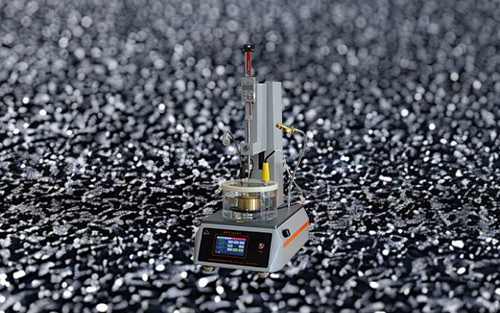
This instrument is a small, desktop-sized unit. It uses a microcomputer for control, linear heating, and automatic stirring, providing accurate and reliable measurement results. Test results are displayed automatically upon completion. The beaker is made of high-temperature resistant glass, and the specifications of the heating rate, steel ball positioning ring, steel balls, etc., meet the requirements of the standard.
Digital display, constant temperature water bath, adjustable needle insertion time control device. A special low-temperature circulating constant temperature water bath provides a pre-settable, constant low-temperature environment for the tested sample.
Water bath experiments can be selected from 5~90℃, or glycerol experiments from 35~+160℃ can be performed; using microcomputer control, automatic stirring, and linear heating, the heating rate maintains a standard of 5℃/min;
This instrument is a small desktop structure, using microcomputer control, linear heating, and automatic stirring. The measurement results are accurate and reliable, and the test results are automatically displayed on a 5-inch LCD touch screen after the test is completed. The temperature rise per minute is automatically recorded.
The temperature control section uses a high-precision, fast-response, and clear-reading digital electronic temperature controller. The refrigeration unit is an imported 750WF22 high-power compressor. Deep cold can reach minus 28℃.
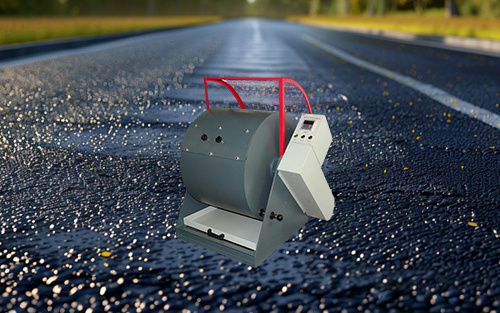
Used to determine the mass loss of road petroleum asphalt after heating with a rotating thin film. And, as needed, determine the changes in properties such as penetration, viscosity, ductility, and softening point of the asphalt residue after heating the rotating thin film, in order to evaluate the aging performance of the asphalt.
The laboratory is constructed with a double-layered stainless steel door. The observation window is rectangular. The interior is equipped with lighting, a cage fan, forced ventilation ducts, vents, a turntable, and other facilities. The laboratory shell is entirely made of stainless steel.
This instrument uses a high-precision temperature control instrument with a temperature control accuracy of 0.1℃. This instrument features a compact structure, beautiful appearance, dual-microcomputer control, convenient operation, and high measurement accuracy.
DescriptionThis instrument is suitable for determining the dynamic viscosity of viscous petroleum asphalt using a vacuum reduced-pressure capillary viscometer. Unless otherwise specified, the test temperature is 60℃, and the vacuum degree is -40kp ± 0.066 kp. This instrument is also suitable for other substances with a viscosity in the range of 0.0036~20.000Pa.s using the vacuum capillary method, with a test temperature of 60℃ and a vacuum degree of -40kp (300mmHg).
DescriptionThis method is suitable for determining the kinematic viscosity of viscous petroleum asphalt, liquid petroleum asphalt, and their distillation residues using a capillary viscometer.
The level bubble is in front, and you can adjust the level while sitting, which is very convenient.
The product is suitable for measuring the asphalt consumption in asphalt pavement construction to assess construction quality, and is also suitable for measuring the asphalt consumption in asphalt pavement in old road surveys.
Description: This test determines the rutting and water sensitivity of hot mix asphalt (HMA). It measures the permanent deformation of the asphalt mixture under moving loads. By determining the rut depth and the number of load applications at failure, it identifies early failures due to insufficient aggregate structure, insufficient binder strength, or water damage. Because the specimens can be fully immersed in water at a certain temperature during the test, it can be used to evaluate the impact of water damage on the asphalt mixture.
Test the tenacity of asphalt under specific conditions to evaluate the modification effect of asphalt after adding modifiers
This instrument is suitable for determining the flash point of liquid petroleum asphalt materials with a flash point below 93℃ using the Tag Closed Cup (TOC) method, used to assess construction safety.
In the laboratory, simulating the volume properties and engineering attributes of actual pavement materials, the test piece is rotated at a uniform circular cycle at an eccentric angle under three main technical conditions: constant vertical pressure, constant compaction angle, and specified compaction speed, using the rubbing method. After constant pressure compaction, the eccentric angle is removed, and the constant pressure rotation is leveled to complete the experimental process of preparing cylindrical specimens of hot-mix asphalt mixture.


Whatsapp:
E-mail: