

Lanhang zhongke
Products

Serbia Reflux extraction test device
Category:
Product Description
Description
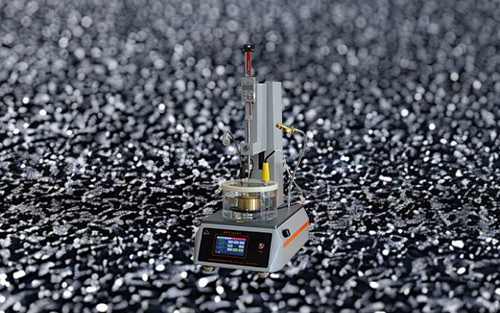
This method is applicable to the detection of asphalt usage in asphalt pavement construction to evaluate construction quality, and is also applicable to the detection of asphalt usage in asphalt pavements in old road surveys. However, for coal tar asphalt pavements, the original measured data of the free carbon content of coal tar asphalt is required. Instruments and materials: The reflux asphalt extraction instrument consists of a water condenser, extraction cylinder, copper mesh sieve bucket, outer cylinder, and heat source.
Methods and Steps
1. Preparation: Prepare a filter paper tube. If there is no filter paper tube, a large sheet of qualitative filter paper can be rolled into a 2-3 layer cylindrical shape, the lower part folded into a flat bottom (size close to the inner size of the sieve net), tied with a thin thread to prevent it from spreading, and another sheet of filter paper and a layer of degreased cotton are placed on the bottom. Weigh the total amount, and carefully place it in the copper mesh sieve bucket.
2. Inject the solvent into the extraction cylinder. The amount can be determined according to the sample weight, generally about 1-1.5 times the sample weight.
3. Collect the asphalt mixture sample according to method T0701 of this regulation. When the sample has cooled and solidified or is a core sample drilled from the road, it should be heated in a microwave oven or oven (petroleum asphalt not higher than 100°C, coal tar asphalt not higher than 80°C) to make it loose (note that it must not be crushed with a hammer). If necessary, use an electric fan to thoroughly dry it for more than 1 hour, and pre-determine the moisture content of the sample.
4. Weigh 1 kg (m) of the loose asphalt mixture sample, accurate to 1 g, and gently place it into the filter paper tube of the copper mesh sieve bucket.
5. Place the copper mesh sieve bucket containing the sample onto the copper column in the extraction cylinder, and cover the water condenser. 6. Test steps: Check whether the extraction instrument is completely installed, open the inlet valve, let cold water flow into the condenser, and continuously flow out from the drainage valve after filling. Connect the circuit, heat the solvent in the cylinder to boiling, and then the steam rises and condenses when encountering the condenser and drops into the copper mesh sieve bucket to wash the asphalt in the mixture sample, and flows into the extraction cylinder through the filter paper. This cleaning process is repeated until the asphalt in the sample is dissolved and washed clean. This process generally takes 8-10 hours.
After the extraction is completed, turn off the power, wait for it to cool, then close the inlet valve, remove the condenser, carefully remove the copper mesh sieve bucket, dry it in a fume hood, and then place the filter paper tube containing the mineral material in a clean metal pan and place it in an oven (105°±5°) until it reaches constant weight, which generally takes 4 hours. Then weigh the dry mineral material (㎡) and the filter paper tube with mineral powder (m³).
抽提结束,关闭电源,待冷却后关闭进水阀,取下冷凝器,仔细将铜网筛筒取出,置通风橱内晾干,再将装有矿料的滤纸筒置干净的金属盘中,并置烘箱(105°±5°)内烘至恒重,一般需4小时。再分别称取烘干的矿料质量(㎡)及带用矿粉的滤纸筒、脱脂棉质量(m³)


Whatsapp:
E-mail: