

Lanhang zhongke

Products

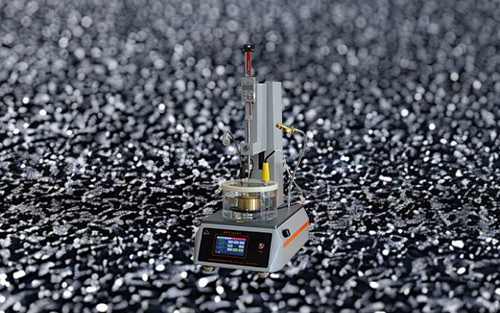
The California Bearing Ratio (CBR) testing apparatus is used to perform CBR tests on various soils and pavement base and subbase materials after preparing specimens in a specified mold.
This instrument was researched and produced by Lanhang Zhongke Measurement and Control Technology Research Institute according to relevant standards. The instrument parameters comply with the latest standard specifications. The California Bearing Ratio (CBR) testing instrument is used to perform CBR tests on various soils and pavement base and sub-base materials after preparing specimens in a specified cylinder. This test should comply with JTG 3430-2020 Highway Geotechnical Testing Procedures. The maximum aggregate size of the mixture should be controlled within 25mm, and the maximum should not exceed 40mm. It uses a servo motor drive and a highly efficient self-developed reduction device (patented product) with a high-precision ball screw.
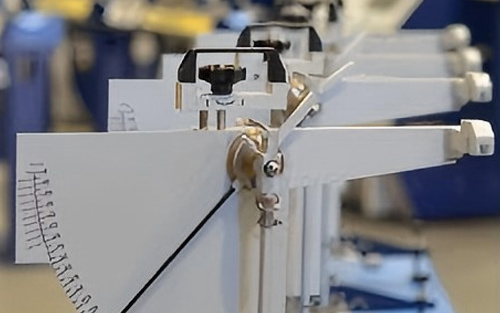
This instrument uses the lever principle to amplify the length of the pressure arm, enabling thickness testing of samples under 2KPa and 200KPa pressure conditions within limited space and weight constraints. Its simple structure, elegant design, and ease of operation make it the preferred instrument for production verification of geotextile and geomembrane thickness.
The instrument is used to determine the impedance penetration ability of geotextiles and related products by a steel cone dropped from a fixed height. It characterizes the degree of damage caused to the geotextile surface by sharp stones falling on it. Its performance meets the requirements for instruments specified in GB/T17630 "Dynamic Puncture Test for Geotextiles and Related Products - Drop Cone Method" standard.
Applicable to the method of determining the characteristic pore size of single-layer geotextiles and related products using the dry sieve principle. This instrument is suitable for all types of geotextile products. It is applicable to GB/T 14799, JTGE50 Highway Geosynthetic Materials Test Procedures, and SL235 Geosynthetic Materials Test Procedures.
Used for testing the vertical permeability performance of geotextiles and compliant materials. Relevant standards: GB/T 15789, JTG E50, SL/T235, ISO11058, ASTM D4716
Geosynthetic Material Static Water Pressure Resistance Tester, used to test the static water pressure resistance performance of nonwoven geotextiles or other materials as substrates, with polyethylene, polyvinyl chloride, etc. as membrane materials to produce nonwoven composite geotextiles (one fabric one membrane) under specified water pressure difference conditions. Standards met: GB/T19979, GB/T17642, JTGE50T1142
Plastic drainage board is also a geosynthetic polymer drainage belt plastic board, a commonly used strip drainage material with a cross-sectional width of 10CM and a thickness of about 5MM. Its quality indicators mainly include the tensile strength of the composite and filter membrane and the longitudinal water flow capacity, meeting the standards JTS-206-1-2009 Water Transport Engineering Plastic Drainage Board, JTGESO-2006 Highway Engineering Geosynthetic Materials, and SL235-2012 Geosynthetic Materials.
The vertical permeameter is a horizontal constant head testing instrument designed and manufactured according to the requirements of the Ministry of Transport's newly released "Test Specifications for Geosynthetics in Highway Engineering JTG E50-2006." It is suitable for testing the vertical permeability performance of various geotextiles and composite geotextiles with water permeability under a constant head. The flow of water (mm/s) perpendicular to the geotextile plane under a unit hydraulic gradient.
The LH ZD--6 Vibrating Compaction Molding Machine is a specialized device designed and manufactured according to the People's Republic of China industry standard (JTGD50--2006), specifically for the technical requirements of molding semi-rigid base material vibration test specimens. It is used to produce various specimens of inorganic binder stabilized aggregates, including cylindrical specimens for testing unconfined compressive strength, strength, indirect tensile strength, and compressive rebound modulus, as well as beam specimens for testing wet shrinkage coefficient, dry shrinkage coefficient, flexural strength, and flexural rebound modulus.
The vertical permeameter is a horizontal constant head testing instrument designed and manufactured according to the requirements of the Ministry of Transport's newly issued "Test Specifications for Geosynthetics in Highway Engineering JTG E50-2006." It is suitable for testing the vertical permeability performance of various geotextiles and composite geotextiles with water permeability under a constant water head.
The double-end surface grinder is an essential main equipment for preparing standard samples for mechanical testing of various non-metallic solids such as rocks, ores, and concrete. This machine works in conjunction with the core drilling machine and stone cutting machine produced by our factory, enabling you to process high-precision cubic or cylindrical test specimens as needed. It is widely used in universities and colleges, water conservancy and hydropower, geology and mineral resources, transportation, construction, and other sectors.
This machine consists of a guide rail, cutter workbench, rock fixture, servo motor, and electrical control console. The frame is mainly welded with various types of steel, resulting in a compact structure, strong rigidity, and good operational stability.
This machine is mainly used in conjunction with the "Multifunctional Electric Compactor," "Marshall Electric Compaction Apparatus," as well as light and heavy manual compaction devices and various mold cylinders for demolding specimens.
The pavement material strength comprehensive tester includes a main unit, force measuring device, and related accessories, used for force value measurement. At the same time, the main unit of this testing instrument requires only minor modifications and the addition of relevant accessories to complete various tests that require the application of vertical loads.


Whatsapp:
E-mail: